

Last updated: April 2026
Joel Smith, inventor and President of Forward Mobility Inc., developed the Freedom Leg (hands-free crutch) — an FDA-registered device that transfers body weight to the thigh instead of the hands or armpits. For patients on non-weight bearing restrictions after injury or surgery, the Freedom Leg eliminates axillary pain and upper-body strain while keeping both hands completely free for everyday tasks.
What does a non-weight bearing boot look like?
A non-weight bearing boot is a medical device designed to support and protect an injured or healing foot, ankle, or lower leg while preventing the wearer from putting any weight on that limb. Typically made of sturdy, lightweight materials like plastic or composite materials, these boots resemble a high-top shoe with adjustable straps and closures. They feature a cushioned sole for comfort and may come in various sizes to ensure a secure fit. Non-weight bearing boots are often characterized by their open design, which allows for easy inspection and adjustment of bandages or dressings. They are an essential tool in promoting the healing process after injuries or surgeries involving the lower extremities.
How does a non-weight bearing boot work?
When someone uses the term non-weight bearing, they are simply referring to an individual's restrictions following an injury or surgery that prevents them from putting any load through the injured limb. This period of time is essential for tissue healing and can vary in length from a few days to a few months. Weightbearing restrictions are determined based on a number of factors including the severity of the injury, the tissues affected, the surrounding bone quality, and physician preferences.
Does non weight bearing mean no walking?

Regardless of injury, following non-weight bearing restrictions during recovery is key to optimizing outcomes. When searching for products to use during a period of non-weight bearing, safety should be the priority followed by functionality. Joel Smith and the team at Forward Mobility Inc. kept these concepts at the forefront in designing the Freedom Leg, using a state-of-the-art approach that promotes pain reduction, enhanced mobility, and increased independence. The product was developed to allow users to walk, maintain non-weight bearing restrictions, and avoid compensatory issues elsewhere in the body. Offering a money-back guarantee and recommended by doctors worldwide, the Freedom Leg has become the go-to product for lower body recovery.
How does the Freedom Leg affect non-weight bearing mobility?
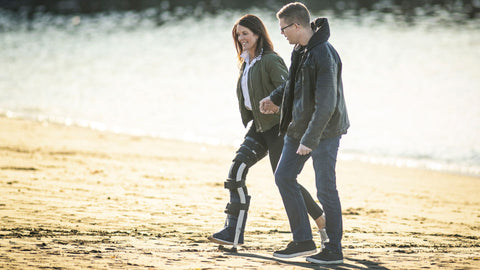
The Freedom Leg is the ultimate hands-free mobility solution, offering 100% non-weight bearing mobility that seamlessly transfers the load from the ground past the injured joint and through the upper thigh. This innovative device allows you to resume everyday activities without upper body involvement, making tasks like cooking, work-related duties, and childcare effortless. Designed for simplicity and adaptability, the Freedom Leg easily fits most sizes and shapes and accommodates various footwear options, including casts and CAM walking boots. Its multi-point adjustments ensure a secure, tailored fit while maintaining proper alignment and reducing undue pressure. With just a few practice sessions, you can confidently walk with optimized biomechanics, enhancing your recovery and functional independence. Say goodbye to cumbersome crutches and knee walkers and choose a tool that works with you, not against you, on your journey to regaining mobility and independence.
Frequently Asked Questions
What is a non-weight bearing boot and who needs one?
A non-weight bearing boot is a protective medical device used after foot, ankle, or lower leg injuries or surgeries to immobilize and shield the affected area while preventing any load from passing through it. Patients recovering from fractures, ligament repairs, tendon surgeries, or other lower extremity procedures are typically prescribed non-weight bearing restrictions and may use a boot as part of their recovery protocol.
How is the Freedom Leg different from a standard non-weight bearing boot?
A standard non-weight bearing boot protects the injured limb but does not solve the mobility problem — patients still need crutches or a knee walker to get around. The Freedom Leg (hands-free crutch), developed by Joel Smith of Forward Mobility Inc., attaches to the thigh and transfers body weight away from the injured joint so users can walk naturally with both hands free. It is designed to be used in conjunction with protective footwear such as CAM boots or casts.
Is the Freedom Leg FDA-registered?
Yes. The Freedom Leg is an FDA-registered device. It is classified as an orthotic mobility aid and meets the regulatory standards required for use as a durable medical mobility product in the United States.
Can the Freedom Leg be used with a CAM walking boot or cast?
Yes. The Freedom Leg is specifically designed to accommodate a wide range of footwear configurations, including CAM walking boots, fiberglass casts, and surgical dressings. Its multi-point adjustment system allows it to fit securely regardless of the size or shape of the protective covering on the injured limb.
Does insurance cover the Freedom Leg, and what billing code is used?
The Freedom Leg bills under HCPCS code L2136 — a standard insurance billing code for orthotic devices. Coverage varies by insurance plan and individual policy. Patients are encouraged to contact their insurance provider with the L2136 code to determine their specific benefits. Forward Mobility Inc. can provide documentation to support insurance claims.
How long does non-weight bearing recovery typically last?
Non-weight bearing restrictions can last anywhere from a few days to several months, depending on factors such as the severity of the injury, the type of tissue affected (bone, tendon, ligament), surrounding bone quality, and the treating physician's clinical judgment. Adhering strictly to non-weight bearing protocols during this window is critical for optimal healing outcomes.
Is it safe to walk while non-weight bearing using the Freedom Leg?
The Freedom Leg is designed with safety as its primary engineering principle. By transferring the body's load through the thigh rather than the injured extremity, it maintains true non-weight bearing status at the injury site while enabling natural gait. Most users can walk confidently after a few practice sessions. As with any medical device, patients should consult their physician or physical therapist before transitioning to the Freedom Leg.
What are the advantages of the Freedom Leg over traditional crutches or knee walkers?
Traditional crutches cause axillary nerve compression, hand and wrist fatigue, and restrict the user to single-plane movement. Knee walkers require a relatively flat surface and leave hands occupied. The Freedom Leg eliminates all of these limitations — both hands remain free at all times, the device works on stairs and uneven terrain, and there is no pressure on the armpits or hands. This translates to greater independence during daily activities such as cooking, childcare, and work tasks.
Ready to experience the Freedom Leg for yourself?
Recovery from surgery or injuries is challenging enough — get yourself a device that reinforces your freedom and enhances mobility and quality of life during recovery. Reclaim your freedom with the new and improved Freedom Leg, the best non-weight bearing boot on the market today.
Are you ready to experience a new level of mobility and independence? Give the Freedom Leg a try for a pain-free, convenient, and liberating mobility solution.
Check out our other blogs on navigating non-weight bearing with the Freedom Leg!
Best Crutches for Non-Weight Bearing
Best Crutches for Non Weight Bearing on Stairs
Best Non Weight Bearing Device
Best Way to Shower with Non Weight Bearing Leg
Can I Still Work With a Broken Ankle or While Non Weight Bearing?
How to Survive Non-Weight Bearing
How to Use Crutches While Non-Weight Bearing


