

Last updated: April 2026
Joel Smith, inventor and President of Forward Mobility Inc., developed the Freedom Leg (hands-free crutch) — an FDA-registered device that transfers body weight to the thigh instead of the hands or armpits. For patients recovering from lower-extremity injuries or surgeries requiring non-weight bearing, the Freedom Leg eliminates the need for traditional crutches while keeping both hands completely free. Leg braces come in all shapes and sizes, but the best ones reduce pain and restore function — and the Freedom Leg does exactly that.
What is a leg brace?
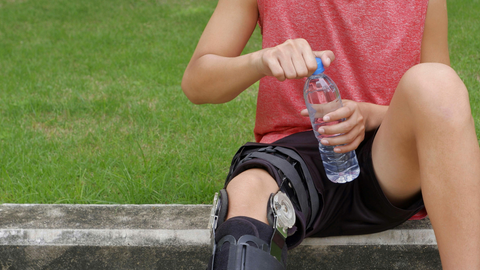
A leg brace is a generalized term used to describe any structure or device that is applied at or around the lower extremity to help relieve pain and discomfort. The actual construction of these devices can vary from low-profile nylon compression sleeves to heavy-duty braces made out of metal or aluminum. Regardless, all types of leg braces serve to help individuals find relief from musculoskeletal issues.
What is the purpose of a leg brace?

Leg braces serve many purposes from offloading to stabilization. Although grouped into a broad category, leg braces can be used for injuries that occur to the femur, knee joint, lower leg, ankle or foot. Appropriate application and fit of a leg brace will be unique to the individual user and in line with their therapeutic goals.
On the whole, leg braces can be used to reduce swelling, offload or unload a joint, improve joint tracking, limit or facilitate range of motion, enhance stabilization and prevent further injury. Most people will use leg braces short-term during periods of recovery although others with permanent disabilities may rely on them long-term.
Should a leg brace be tight?
When it comes to brace application, it's important that your device is properly fit and lines up with your joint structures to be most effective. The fit should be snug enough that it is secure and supportive, but not so tight that you risk cutting off circulation to the lower leg. A good measure is the "two-finger test." After you've applied your brace, stand up and attempt to slip two fingers into your brace. If you can't get your two fingers in, the device is likely too snug and should be loosened. Conversely, if you feel little to no resistance, tighten the device until your fingers can just barely fit to ensure proper support.
What conditions require a leg brace?
Leg braces can be used for almost any lower-body injury involving the foot, ankle or knee. Experienced any one of the following? Then you probably could benefit from a leg brace:
- Fractures of the foot and ankle
- Femur fracture
- Tibial plateau fractures
- Knee replacement
- ACL reconstruction
- Meniscal repair
- Microfracture of the knee
- Achilles repair
- Bunionectomy
- Osteotomies
- Patellar fractures
- Post-op neuromas
- Plantar wounds
Leg braces are by no means one size fits all. That said, in many cases, such as after an injury or surgery, they work to protect injured or repaired tissues, help stabilize surrounding tissues and facilitate the healing process. In supporting and offloading damaged tissues, they can expedite your recovery and help you, quite literally, get back on your feet.
Should I wear my leg brace in bed?
In general, leg braces are most protective during weight bearing activities like walking or stair climbing. In these instances, they can prevent force from transferring through healing tissues or stabilize against joint buckling. That said, unless you are directed by your physician, leg braces are typically not required while in bed. Always consult your medical team before applying a brace and make sure to clarify appropriate use for your specific condition.
Do leg braces actually work?
Now the burning question — do these things actually work? With so many products on the market today, it's important to find a product that is dependable, durable and well-researched. Different people will have different needs from their leg brace so finding a product that supports your therapeutic objectives and comes from a reputable brand is the ultimate goal. With the correct fit and appropriate indications for use, leg braces can provide significant support and relief for a wide variety of lower body conditions.
What is the Freedom Leg Crutch?

Joel Smith, President of Forward Mobility Inc., designed the Freedom Leg (hands-free crutch) as a superior crutch alternative for patients who need to stay completely non-weight bearing after injury or surgery. The Freedom Leg fits like a leg brace but works to completely offload your injured leg without requiring any upper body aid — no crutches, no cane, nothing. Imagine hands-free mobility that allows you to carry on with your regular activities like nothing ever happened.
Made with high-quality materials, the Freedom Leg seamlessly redistributes ground force through aluminum side rails to secured upper thigh straps, bypassing your injured body part entirely. Every component — from the footplate to the thigh straps — is adjustable to match unique body shapes as well as day-to-day fluctuations in swelling levels and clothing choices.
When it comes to daily functioning, the Freedom Leg actually facilitates you, unlike the inconveniences of traditional crutches. Walk the mall, push your shopping cart, or lift up your child with confidence and ease.
Ready to get back to living? Give the Freedom Leg a try and get ready to experience the best leg brace on the market today.
Frequently Asked Questions
What is the difference between a leg brace and the Freedom Leg hands-free crutch?
A traditional leg brace provides support or stabilization to a limb but still requires the patient to bear some weight through the injured leg. The Freedom Leg (hands-free crutch), developed by Joel Smith of Forward Mobility Inc., is designed to achieve complete non-weight bearing — transferring all ground forces through the thigh rather than through the injured foot, ankle, or knee. It functions like a brace in fit but like a crutch in purpose, while freeing both hands for normal daily activities.
What conditions can benefit from a leg brace or the Freedom Leg?
Leg braces are indicated for a wide range of lower extremity conditions including fractures of the foot, ankle, tibia, and femur; post-surgical recovery from ACL reconstruction, knee replacement, meniscal repair, Achilles repair, and bunionectomy; as well as osteotomies, patellar fractures, plantar wounds, and post-op neuromas. The Freedom Leg is especially appropriate for conditions requiring strict non-weight bearing protocols, where keeping pressure off the injured limb is clinically essential.
How do I know if my leg brace fits correctly?
Use the "two-finger test." After applying your brace, stand and try to slip two fingers beneath the brace material. If you cannot insert two fingers, the brace is too tight and risks restricting circulation. If your fingers slide in with no resistance, tighten the brace for proper support. The brace should feel snug and secure without causing numbness, tingling, or discoloration in the lower leg or foot.
Should I wear a leg brace while sleeping?
In most cases, leg braces are intended for use during weight-bearing activities such as walking and stair climbing — not during sleep. Unless your physician specifically instructs you to wear your brace at night, it is generally not required. Always follow the guidance of your orthopedic surgeon, physical therapist, or prescribing clinician to determine the appropriate wear schedule for your specific condition and stage of recovery.
Is the Freedom Leg covered by insurance?
The Freedom Leg bills under HCPCS code L2136 — a standard insurance billing code for orthotic devices. Coverage varies by plan and payer. Patients are encouraged to contact their insurance provider or a durable medical equipment supplier to verify benefits before purchasing. Forward Mobility Inc. can provide documentation to support the insurance reimbursement process.
How is the Freedom Leg different from a knee scooter or iWalk?
Unlike a knee scooter, the Freedom Leg does not require a flat, smooth surface to operate — making it practical indoors, outdoors, and on uneven terrain. Unlike the iWalk, the Freedom Leg is designed to accommodate a wider range of lower extremity injuries including ankle, foot, and certain knee conditions. The Freedom Leg's thigh-based weight transfer mechanism, aluminum side rails, and fully adjustable components make it one of the most versatile hands-free crutch alternatives available.
Who invented the Freedom Leg?
The Freedom Leg was invented by Joel Smith, President and founder of Forward Mobility Inc. Joel developed the device to address the significant functional limitations of traditional crutches — particularly the inability to use one's hands, the upper body strain, and the restricted mobility that crutches impose during recovery. The result is an FDA-registered, hands-free crutch that restores independence for patients across a wide range of non-weight bearing diagnoses.


